It is the question every spa reception desk hears at least three times a day. A guest stands at the counter, menu in hand, looking genuinely uncertain. Thai massage or Balinese? Both sound appealing. Both promise something. Both are popular enough to appear on almost every hotel spa menu in India. And yet the two therapies are so fundamentally different — in technique, in origin, in physical mechanism, and in what they actually do to the body — that choosing the wrong one is the equivalent of taking a painkiller when you needed an antihistamine. Helpful in a general sense. Not quite right for the specific thing.
This guide exists to close that gap. By the end of it, you will know not just what each therapy involves, but which one your body is actually asking for today.
What is Thai Massage?
Thai massage is one of the oldest structured healing systems in the world, with roots in the Ayurvedic medicine of ancient India and the traditional healing practices of Buddhist temple culture in Thailand. Its formal name — Nuad Bo-Rarn — translates roughly as “ancient healing touch,” and it has been practised in essentially its current form for over two thousand years.
The first thing most guests notice is what Thai massage is not. It is not performed on a raised table. It uses no oil. You do not undress. Thai massage is practised on a padded floor mat, with the client wearing loose, comfortable clothing throughout the session. This alone distinguishes it from almost every other massage modality on a typical spa menu.
The technique itself is dynamic, engaged, and — if you have never experienced it — occasionally surprising. Your therapist uses their hands, thumbs, elbows, knees, and feet to apply rhythmic compression along the body’s Sen energy lines — a system of energy pathways similar in concept to the meridians of Traditional Chinese Medicine. Between the compression sequences, the therapist guides the body through a series of assisted yoga-like stretches: hips opened, spine lengthened, shoulders drawn back, legs extended in configurations you would not reach alone.
The physical effect is distinctive. Thai massage increases flexibility and range of motion, releases deep tension in the fascia and muscle tissue, stimulates the flow of energy through the body’s pathways, and leaves the body feeling simultaneously lighter and more thoroughly worked than most guests expect. It is active rather than passive — you will not drift to sleep on a Thai massage mat the way you might on an oil massage table. It demands a degree of participation from your body, even if your only job is to stay relaxed and let the therapist move you.
At Aavya Wellness, Thai massage is available in 45, 60, and 90-minute sessions. The 90-minute session is the one most experienced guests choose, because Thai massage builds on itself — the stretches in the second half of the session are made possible by the compression work in the first half, and the full therapeutic arc is only completed at the longer duration.
What is Balinese Massage?
Balinese massage comes from the Indonesian island of Bali, where it evolved as a synthesis of several healing traditions: Indian Ayurvedic medicine, Chinese acupressure, and the indigenous Balinese approach to spiritual and physical wellbeing. It is, in many ways, a meeting point of the major healing philosophies of Asia — and it carries something of the warmth and generosity that characterises Balinese culture more broadly.
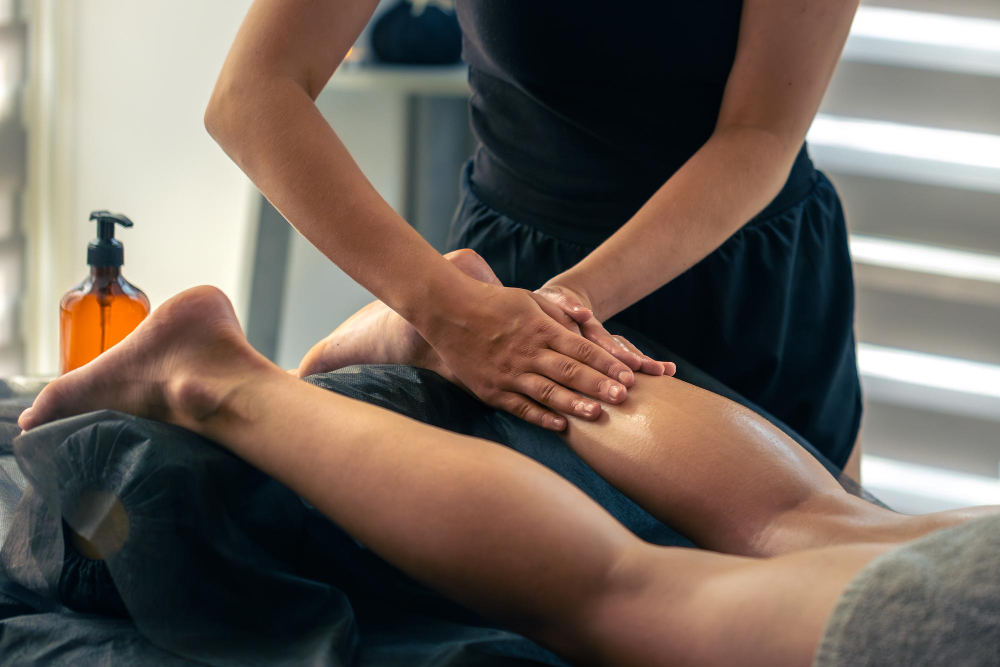
Unlike Thai massage, Balinese massage is practised on a raised table with the client undressed and covered with a sheet. Warm aromatic oils are applied throughout the session — chosen for their therapeutic properties and for their effect on the skin. The technique combines long, flowing effleurage strokes along the full length of the body with deeper kneading of the muscle tissue, rolling movements that work the fascia, and acupressure applied along the meridian pathways of the body.
The experience is deeply immersive. Where Thai massage is alert and dynamic, Balinese massage is meditative and enveloping. The long strokes in particular — running from the lower back up along the spine, from the ankle along the calf and thigh — create a full-body rhythm that engages the parasympathetic nervous system within the first fifteen minutes of a session. Most guests find themselves crossing the threshold from wakefulness to a deeply relaxed, semi-conscious state before the first quarter of the session is complete.
The physical effects are wide-ranging: deep muscle tension released through the kneading and rolling techniques, improved circulation from the effleurage strokes, skin deeply nourished by the oil application, and — critically — a systemic shift in the nervous system’s mode of operation. The body moves from sympathetic (alert, responsive, stress-reactive) to parasympathetic (calm, restorative, repair-focused). This shift has measurable physiological consequences: cortisol levels drop, blood pressure reduces, the digestive system reactivates, and the body begins the kind of cellular repair work it can only do when it is genuinely at rest.
Balinese massage is available at all Aavya Wellness spa locations in 45, 60, and 90-minute sessions.
The Key Differences – Side by Side
The most fundamental difference between the two therapies is the axis of their effect. Thai massage primarily targets the body’s structural systems — joints, fascia, energy pathways, range of motion. Balinese massage primarily targets the body’s nervous and emotional systems — stress response, cortisol, the quality of rest.
Thai massage is clothed, oil-free, floor-based, active, and energising. Balinese massage is unclothed, oil-rich, table-based, passive, and deeply calming. Thai demands your body’s cooperation; Balinese asks only that you surrender to it.
Both are profoundly effective. They are simply effective at different things.
How to Choose Between Them
Choose Thai Massage if:
Your primary complaint is physical stiffness, reduced flexibility, or chronic tension in specific joints — hips, shoulders, lower back. You have a sedentary desk-based lifestyle and your body needs to be moved as much as it needs to be relaxed. You feel energetically depleted rather than simply tired. You have experience with yoga or other movement-based practices and respond well to assisted stretching. You want to feel different in your body — more mobile, more free — rather than simply less tense.
Choose Balinese Massage if:
Your primary experience is stress, anxiety, or emotional exhaustion. You have not slept well recently. You carry tension in the soft tissue rather than the joints — back muscles, neck, shoulders. Your skin is dry or you would welcome the nourishment of warm aromatic oils. You want to feel deeply, completely rested — the kind of rest that an ordinary lie-down does not produce. You are a first-time spa guest: Balinese is a lower-barrier entry point precisely because it asks less of the body and produces results that are immediately, unmistakably felt.
What Our Therapists Recommend
The Aavya Wellness therapy team offers one consistent piece of guidance when guests cannot decide: tell us what today has been like. The body’s needs change — not just week to week but day to day. The same person who needed Thai massage on a long-travel day may need Balinese at the end of a stressful work week. There is no wrong choice between two excellent therapies. There is only a more precisely right one for this particular body, on this particular day.
If you are genuinely uncertain when you arrive, our therapists will spend five minutes in conversation with you before your session begins. That conversation — about how your body feels, where it holds tension, what today has asked of it — is itself part of the treatment.
Ready to Book Your Therapy?
Tell us what you are looking for and we will be in touch within the hour.
